
A patio is only as good as what's under it. The stone you pick gets all the attention. What decides whether it's still flat in ten years is the base: how deep we dig, how many layers of gravel go in, how hard each one gets packed, and which direction the finished surface tilts. Get that wrong and the patio settles, rocks underfoot, and sprouts weeds through every joint. We see it all the time on older patios in Corte Madera and on the flat lots down toward the bay, where the soil stays wet from December to April.
Hardscape is everything solid in a yard: patios, paths, steps, edging and seat walls. It's usually the biggest single cost in a landscape and the part you'll live with longest, since plants can be swapped in an afternoon and stone can't. Here we cover the signs your old hardscape is failing, how the main materials compare, how we build a base that holds, and what upkeep looks like. A patio should outlast the furniture on it, the fence beside it and probably the next owner. If your patio sits at the foot of a slope, our retaining walls handle the hillside side of the job.
Signs Your Patio or Path Is Failing
Hardscape tells you when it's in trouble. Pavers that rock when you step on them, or sit higher than their neighbors, mean the base has shifted. Puddles that linger after rain mean the surface was never sloped to drain. Cracks across a concrete slab, especially ones that keep growing, point to soil moving underneath. Weeds and moss in every joint mean the joint sand has washed out. A patio that tilts toward the house is the one to fix first, because it aims every storm at your foundation. And loose stepping stones or uneven path edges are worth dealing with even if they look minor. They're the most common trip hazard in a yard, especially for older relatives and guests who don't know where the dips are.
Pavers, Natural Stone or Concrete
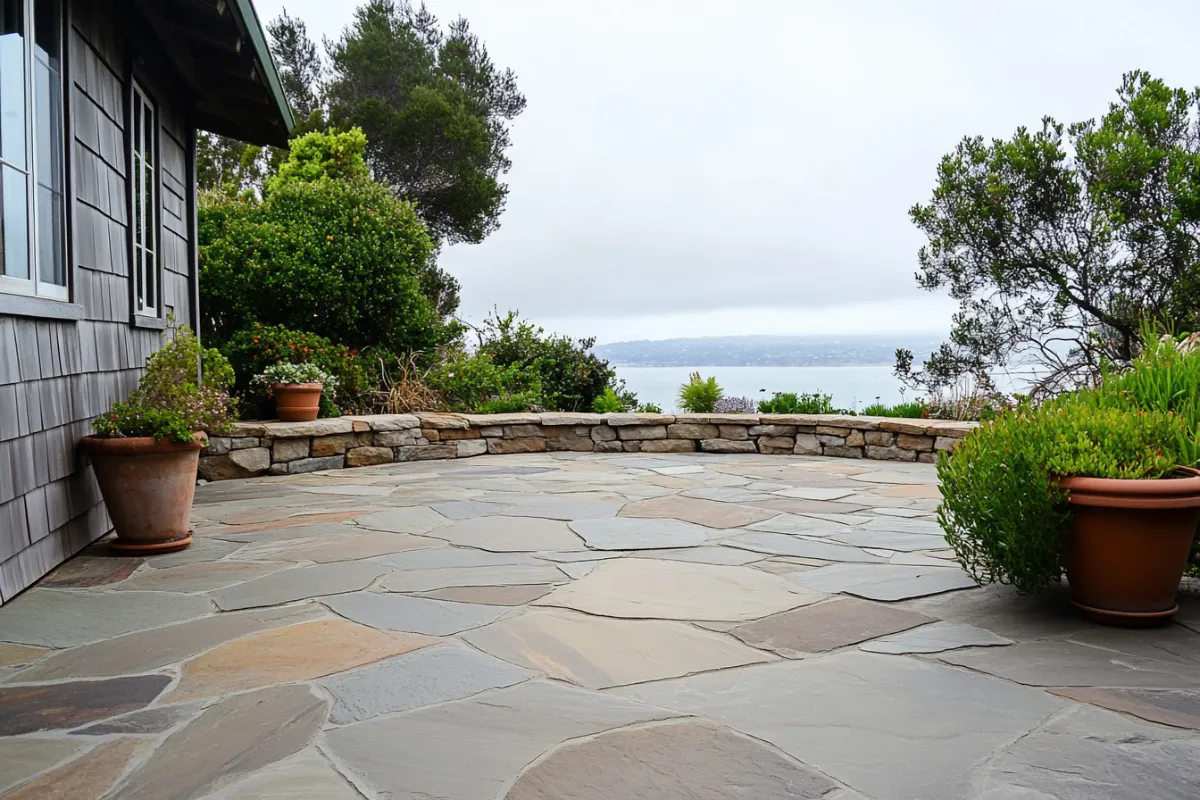
Each has its place. Concrete pavers come in endless shapes and colors, and because every piece is separate, a section can be lifted and reset if the ground moves or a pipe needs work. Natural stone, flagstone, bluestone, granite, has a look nothing manufactured matches, which is why it shows up in the older gardens around Tiburon, and it costs more to buy and more to lay. Poured concrete is the most economical choice for a big area and can be stained or stamped, but it will crack sooner or later, so the control joints have to be placed well. Gravel and decomposed granite are simple, drain instantly, and suit natural gardens and the fire-safe zone near the house. Price is only part of the decision. Think about how the surface feels barefoot in July, how slick it gets in a shaded corner in February, and whether it looks like it belongs with the house.
Free estimate, no obligation.
Call [TRACKING NUMBER]How We Build a Patio That Stays Level
We dig deeper than people expect. Marin clay needs a real base, so excavation comes first, then fabric where the soil calls for it, then crushed gravel in layers, each one packed with a plate compactor before the next goes down. The finished surface tilts gently away from the house so storm water sheets toward a drain or a planting bed instead of sitting. Pavers go on a bed of sand or fine gravel, get edge restraints so the outer rows can't wander, and get joint sand swept in and locked. Mortared stone goes on a concrete slab instead. Steps get consistent riser heights so no one catches a toe, and any path that crosses a low spot gets a drain beneath it. Either way, the slope and the base are what you're really paying for.
Keeping Hardscape in Good Shape
It doesn't ask for much. Sweep it, rinse it, pull the occasional weed. Paver joints may want a top-up of sand after a few years, especially where heavy runoff crosses the patio. Sealing is optional: it deepens color and slows staining from leaves and grill drippings, and it has to be redone every few years. In damp, shaded spots, moss and algae make stone slick in winter, and a periodic cleaning keeps it safe underfoot. If a tree root starts lifting a corner, catch it early. Resetting a few pavers is easy. Resetting a whole section isn't. A base built right is the part that stays out of sight and out of mind for good.
If the patio is part of a bigger change to the yard, start with landscape design so it lands in the right spot the first time.
Common Questions
Several days to about two weeks on site for a typical backyard patio. Excavation and base work take the most time, because each gravel layer has to be fully compacted before the next goes down. Laying the pavers goes fast once the base is right. Steps, curves, seat walls or a sloped site add time, and so does rain, since we won't compact a soggy base. Your estimate will spell out a realistic timeline for your patio.
Sometimes. If the old slab is sound, level and sloped away from the house, thin pavers or stone can be set on it, which saves the cost of demolition. If it's cracked, sinking or tilted toward the house, covering it only hides the problem, and the new surface will shift right along with the old one. We check the slab during the site visit and tell you plainly whether it's a usable base or needs to go.
Light. Sweep off leaves, rinse it now and then, and pull any weeds that find the joints. Every few years, check the joints and sweep in fresh sand where it has washed out. Sealing helps with stains and color but is optional and needs reapplying over time. If a single paver ever sinks or cracks, it lifts out and resets on its own, which is one of the real advantages over a poured slab.