
Belvedere is one of the smallest towns in Marin and one of the most demanding places to build a garden. Homes on Belvedere Island cling to steep hillsides above the water, reached by narrow, winding lanes with almost nowhere to park a truck. Around Belvedere Lagoon, the ground is flat and close to the water, with gardens that run right down to the shoreline. Both settings bring wind off the bay, salt in the air and views that every planting decision has to respect.
We plan Belvedere projects around the slope, the water and the logistics. On the island, that means strong retaining walls and terraces that turn a cliff-like lot into usable space. Along the lagoon, it's patios and garden paths that make the most of the waterfront. Phone or write through the form, and we'll plan a time to see the lot.
Steep Lots on Belvedere Island
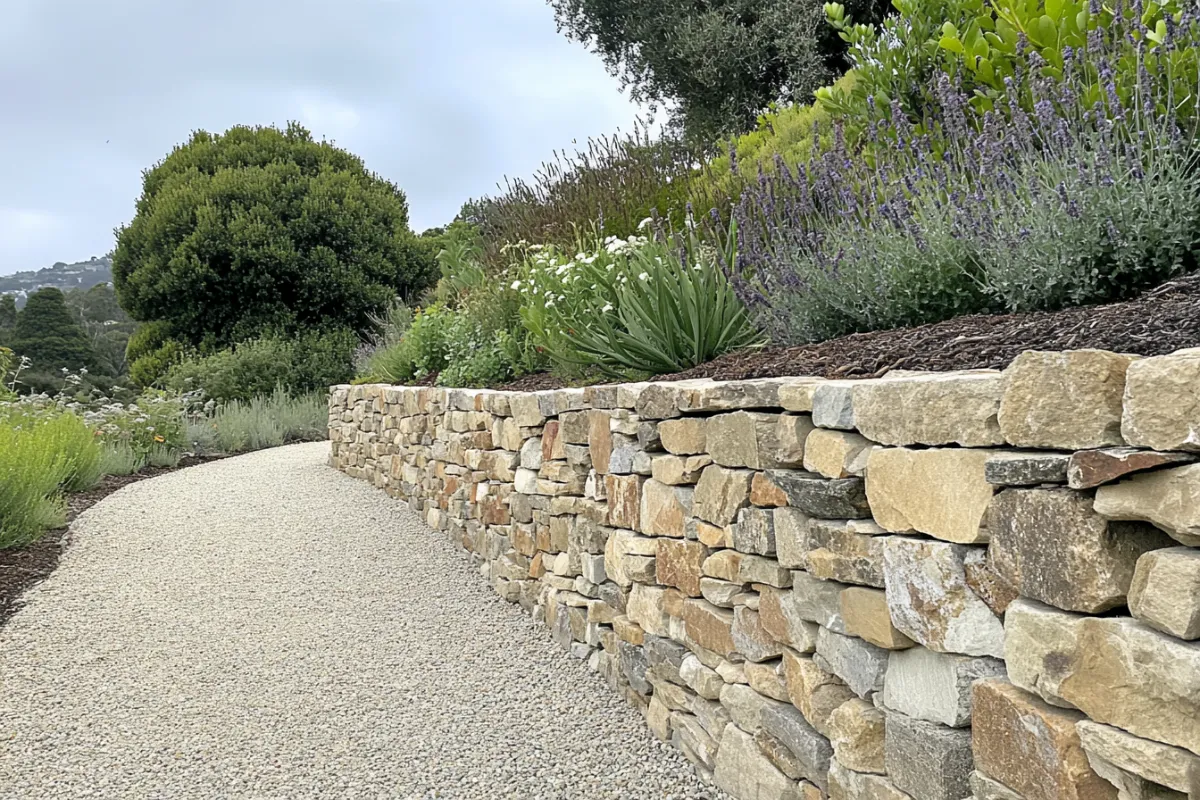
Building on Belvedere Island takes as much planning as building anything. Lots are steep, often with rock close to the surface, and many homes have only a narrow strip of flat ground beside the house. Turning the rest into garden usually means a series of terraces held by engineered walls, connected by stairs and paths. Access drives the schedule: narrow lanes, limited parking and long carries mean small equipment, careful staging and materials moved in by hand or with compact machines. Neighbors are close, so we plan deliveries and noise to keep disruption down. Drainage gets built into every wall and step, because winter runoff on these slopes can be fierce. Planting leans on tough, wind-tolerant shrubs and groundcovers that hold the soil and don't block views. On the sunniest south-facing slopes, low-water planting and drip lines keep the hillside green without sending runoff into the lane below. Many of these gardens are viewed as much from the water as from the house, so we think about how a terrace looks from the lagoon or the cove, too. Similar rocky, steep ground continues across the cove in Tiburon.
Waterfront Gardens on the Lagoon
The homes around Belvedere Lagoon sit on low, flat lots with water at the back door, and the garden usually leads to a dock or a lawn by the water. The ground here stays wet in winter, the water table is high, and the lowest corners of the lot can pick up a little salt. We grade so water moves away from the house, use well-drained bases for patios and walkways, and choose plants that tolerate wind, occasional salt and wet winter soil. Lawns are often reduced or replaced with low groundcovers and gravel, which hold up better and need less care. Because the lagoon is so visible, we keep planting tidy and low along the water so the view across stays open. For the lowest lots, our yard drainage work handles the water that collects after storms. Seawalls and docks along the lagoon are their own specialty, so we build the garden up to them and coordinate with the people who maintain them.
Belvedere Landscaping Questions
With planning and small equipment. Before work starts, we map out where materials can be dropped, how they'll get from the street to the work area and where equipment can safely sit. On many island lots, that means compact track machines, wheelbarrows, conveyors or carrying materials by hand down stairs. We schedule deliveries to avoid blocking narrow lanes and keep neighbors informed. It adds some time, but it's how good work gets done on Belvedere's hillsides.
Tough coastal plants. Rosemary, lavender, coastal sage, ceanothus, coffeeberry, native grasses, sea thrift and many succulents handle wind and occasional salt spray well. Low, dense shrubs do better than tall, open ones, which get battered and lean. On the most exposed spots, we start with sturdier plants as a windbreak and tuck more delicate plants behind them.