
Marin goes months every year with barely any rain. From May through October, a thirsty lawn and a border of water-hungry shrubs depend entirely on the hose or the sprinklers, and they still look tired by September. The county has also lived through serious droughts and water restrictions, and when the next one comes, the yards that were planted for it will barely notice. Out in Novato, where summers run hotter, and on the sunny hillsides above Mill Valley, the difference shows up quickly.
A drought-tolerant garden doesn't mean cactus and gravel, and it doesn't mean giving up a green yard. It means choosing plants that evolved for a climate like ours, grouping them sensibly, and watering them deeply but rarely. This page covers when it's time to make the switch, which plants work here, how we convert a yard, and how the same choices can make a home safer from wildfire. The best results come from pairing new planting with efficient drip irrigation that waters each bed exactly as much as it needs.
Signs It's Time to Change Your Planting
A few signs suggest your yard is working against the climate. Your water bill climbs every summer and spikes in heat waves. The lawn turns brown unless it's watered almost daily, and still has dead patches. Shrubs struggle, drop leaves or need constant replanting. You spend weekends mowing, edging and fertilizing a yard you rarely use. Or a water restriction has you choosing which plants to let die. Steep lawns are another sign: grass on a slope wastes water as runoff and is miserable to mow, and a planted bank holds the soil better anyway. Any of these is a good reason to look at a lower-water design. Replacing even part of a lawn with a planted bed or a gravel garden can cut summer water use noticeably, and the yard often ends up looking better than before.
Plants That Thrive in Marin's Dry Summers
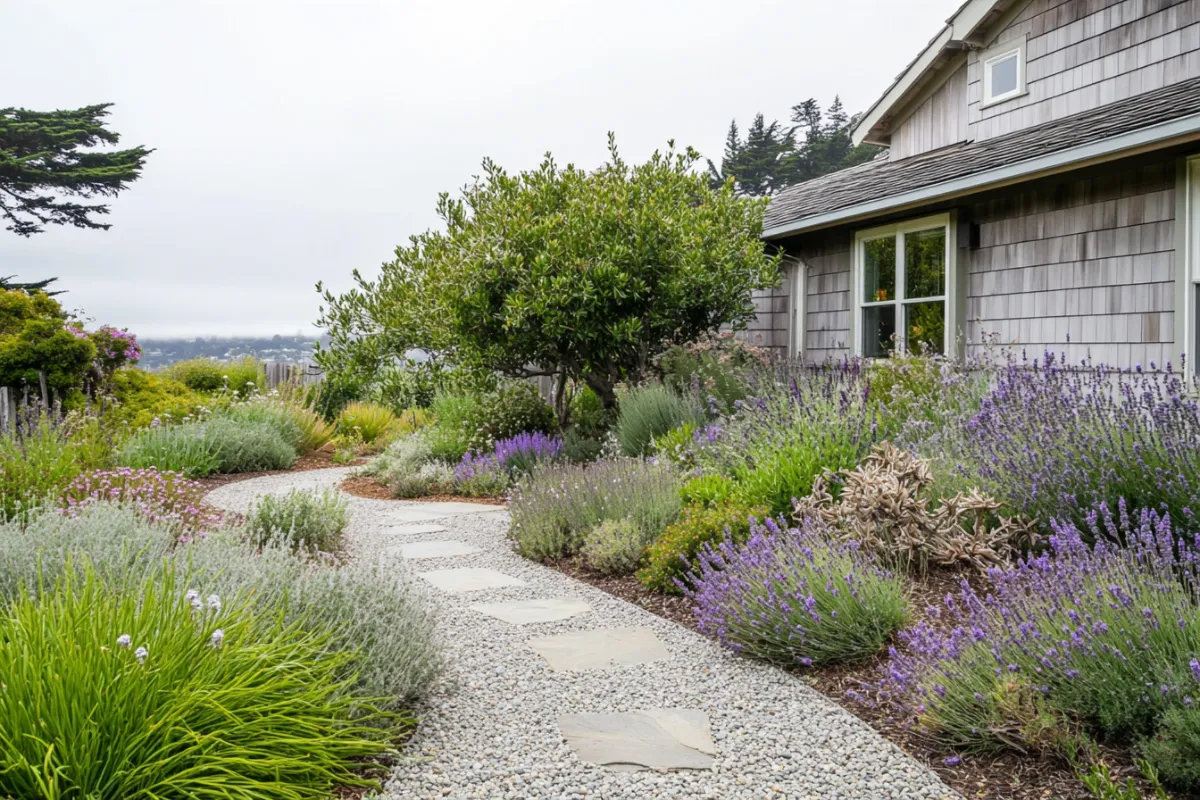
California natives are built for exactly this pattern of wet winters and long dry summers. Manzanita, ceanothus, coffeeberry, toyon, California fuchsia, sages and native bunchgrasses all grow well across much of the county, and many of them feed pollinators and birds. Mediterranean plants from similar climates, like lavender, rosemary, rockrose, olive and many grasses, add color and structure. Succulents fit in sunny, well-drained spots. Placement still matters: a plant that loves full sun in Novato may sulk in a foggy Mill Valley canyon, and deer pressure rules out some choices in many neighborhoods. We pick plants based on your sun, soil, slope and wildlife, not a generic list. We also think about how the garden looks in each season, so it doesn't peak for three weeks in April and look bare by August. A mix of evergreen shrubs, long-blooming perennials and a few grasses keeps something going on all year.
Free estimate, no obligation.
Call [TRACKING NUMBER]How We Convert a Yard to Low-Water Planting
Most conversions start with removing lawn or tired shrubs, either by stripping it out or by smothering it with sheet mulch, layers of cardboard and compost that break down over a season. We loosen and amend the soil, adjust grades so water soaks in instead of running off, and lay out paths, gravel areas and planting beds. Plants go in grouped by water needs, with drip irrigation installed underneath. A layer of mulch or gravel finishes the beds, holding moisture in and keeping weeds down. New plants need regular watering for their first year or two while their roots spread. After that, many can get by on a small fraction of what a lawn needs. Ongoing care is lighter too: no weekly mowing, no fertilizer program, just a cleanup and some pruning once or twice a year.
Planting the First Five Feet for Fire Safety
In much of Marin, the plants and ground cover closest to the house also matter for wildfire. Fire officials focus on the five feet closest to a home, often called Zone 0, because that's where wind-blown embers land and ignite things. FIRESafe MARIN recommends keeping that strip free of anything that burns, using gravel, rock, pavers, concrete or bare soil instead of bark mulch and dense shrubs, and California has been finalizing new Zone 0 rules for homes in high-risk areas. Drought-tolerant planting fits that approach naturally: a gravel border with a few low, well-spaced plants close to the house, and fuller planting farther out. It saves water and lowers fire risk at the same time. Rules and insurer requirements vary by location, so we confirm the rules for your lot before we lay out that zone.
If you're starting from scratch, a landscape design lets us plan the planting, the gravel areas and the fire-safe zone together from the beginning.
Common Questions
Yes, especially at first. New plants need regular watering for their first one or two summers while their roots grow deep enough to find moisture on their own. After that, most drought-tolerant plants do best with a deep soak every week or two in the dry months instead of a little water every day. Some natives prefer almost no summer water once established. A drip system with a smart controller makes it easy to give each group exactly what it needs.
Not unless you want it to. A well-planned low-water garden in Marin can be green, full and colorful most of the year. Native shrubs keep their leaves, salvias and California fuchsia bloom for months, and grasses add movement and texture. The difference is that plants are spaced so each one has room to grow, and mulch or gravel fills the gaps instead of lawn. Plenty of the best-looking gardens in the county use far less water than the lawn next door.
For fire safety, the best choices are noncombustible: gravel, decorative rock, pavers, concrete or bare soil. FIRESafe MARIN recommends keeping that whole strip free of bark mulch, wood chips, firewood, dead leaves and woody shrubs. California's draft Zone 0 rules would allow some low plants and small potted plants in parts of that space, but rules depend on your location and fire hazard zone, and your insurer may ask for more. We'll plan that strip so it's safe and still looks finished.