
Tiburon is built on a narrow peninsula, and most of its homes are arranged around a view. Lots climb steeply from the shoreline toward the ridge, yards are often terraced, and the best seat in the house is usually a patio facing the bay. The ground underneath is a challenge of its own. Much of the peninsula has thin, rocky soil, and in places it's serpentine, a type of rock that makes poor soil for most garden plants. Summers are dry and breezy, and water use is a real concern on lots that are mostly slope.
We build Tiburon gardens to frame the view and survive the conditions. That usually means patios and terraces set where they catch the best outlook, low planting that won't block the view as it grows, and low-water plants suited to rocky ground. A phone call or a few lines in the form gets a visit on the schedule.
Rocky Ground and Serpentine Soil
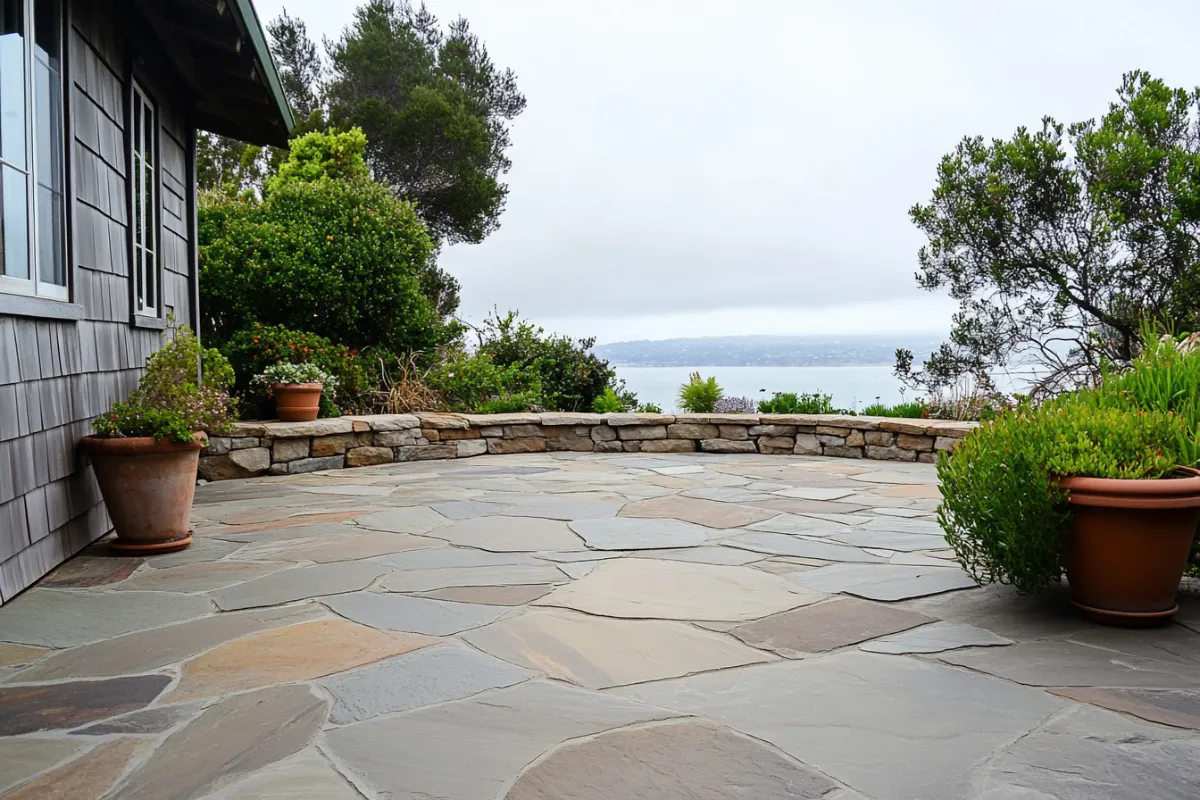
Dig into a Tiburon yard and you often hit rock within a few inches. Over parts of the peninsula, including the slopes around Ring Mountain, the bedrock is serpentine, a greenish rock that breaks down into soil low in key nutrients and high in minerals that many plants can't handle. It's the reason Ring Mountain is home to rare wildflowers like the Tiburon mariposa lily, which grow almost nowhere else. For a home garden, it means typical nursery plants can struggle. The answer is to garden with the rock rather than against it: deep planting pockets filled with imported soil for trees and key shrubs, raised beds for anything that needs richer soil, and plenty of tough natives and Mediterranean plants that do fine in lean conditions. Rock that comes out of excavation often goes back in as walls, steps or boulders, so the garden looks like it belongs to the hillside. Digging in this ground is slower than in deep soil, and we plan for it, using smaller equipment and breaking rock where planting pockets need to go. Neighboring Belvedere has many of the same steep, rocky conditions.
View Gardens on the Peninsula
On a Tiburon lot, the view is often worth more than anything planted in front of it, and nobody wants a hedge that eats the bay a little more each year. We design view gardens from the inside out, standing where you sit and checking sightlines before choosing a single plant. Trees go to the sides, where they frame the view instead of filling it. Shrubs in front of key windows and terraces are chosen for their mature height, not their size in the pot. Neighbors care about views here too, so we keep the plants along shared lines at heights that won't cause friction later. Low grasses, groundcovers and compact shrubs keep the foreground interesting without competing with the water. Lighting is kept low and warm so it doesn't reflect in the glass at night. On terraces, glass or cable railings keep the view open where a solid wall would cut it off. Efficient drip irrigation keeps everything healthy on steep ground, since it waters slowly enough for the rocky soil to take it in.
Tiburon Landscaping Questions
Plants that evolved for thin, lean, fast-draining ground. Manzanita, ceanothus, native buckwheat, sages, California poppy and many native grasses all do well, along with Mediterranean plants like rosemary, lavender, rockrose and olive. On serpentine soils, choosing natives adapted to those conditions makes a big difference. For trees and anything that needs richer soil, we dig larger planting pockets and bring in good soil so roots have room to get established.
By choosing plants for their mature size, not their size at planting. Before we pick anything, we stand in the spots where you'll sit and look out, and we mark which areas need to stay low. Trees go to the sides of the view. Everything in the sightline is chosen to top out below the height that matters, so you won't need to fight it with pruning every year.