
Corte Madera is split by its ground. East of Highway 101, much of town sits on flat land near the bay, some of it built on filled marshland that has been settling slowly for decades. Patios crack, walkways tilt, and lawns go soggy every winter. West of the freeway, neighborhoods like Christmas Tree Hill climb into the hills, where the challenge is steep yards and runoff rather than sinking ground. A landscape that lasts in Corte Madera has to be built for whichever side of town it's on.
We plan Corte Madera yards around what's happening underground. On the flats, that means bases and patios built to handle settling soil, plus drainage that gets water away from the house. Up on the slopes, we focus on walls, steps and planting that keep the hillside in place. Ring us or use the form, and we'll schedule a walkthrough.
Building on Settling Ground East of 101
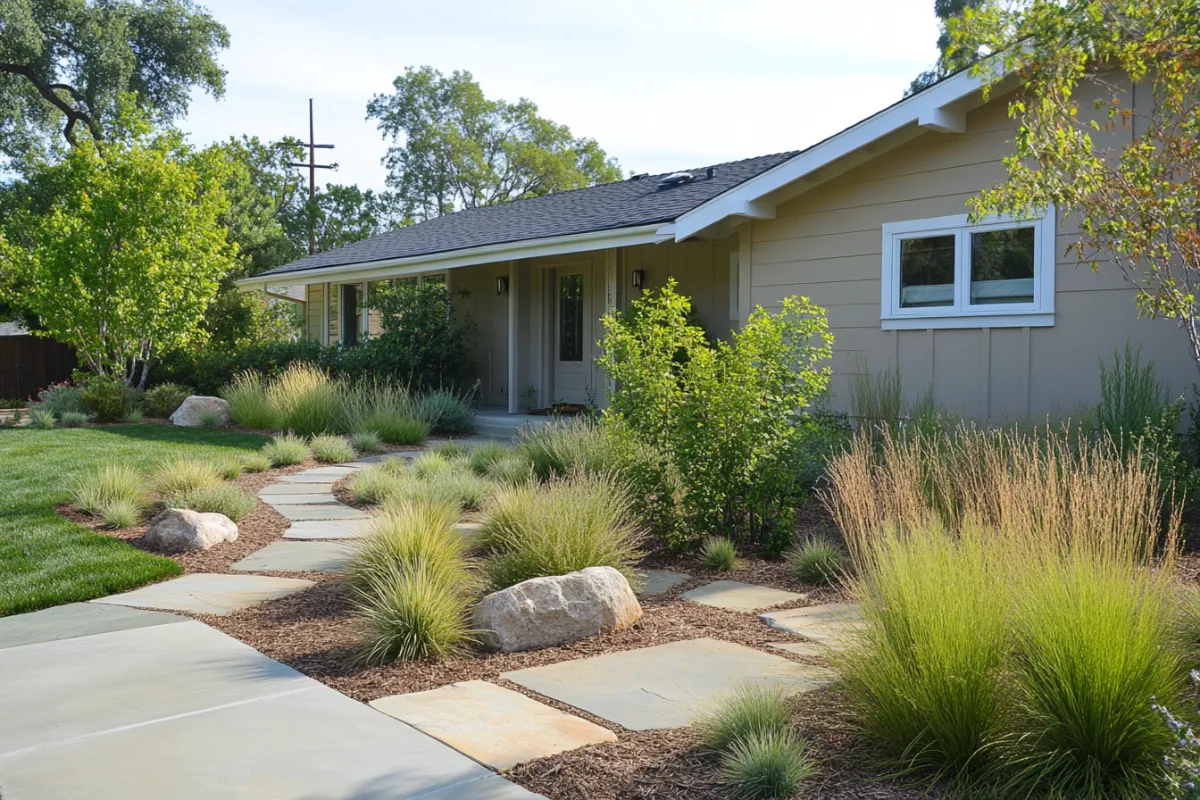
Much of eastern Corte Madera sits on bay mud, soft soil that compresses under weight and keeps settling for years. That's why so many patios and walks in these neighborhoods are cracked, tilted or pulling away from the house. Building on it takes a different approach. We dig out more of the soft material and replace it with a thicker gravel base, compacted in layers. Pavers or stone set on that base can flex with the ground and be relaid later, which usually makes more sense here than a rigid concrete slab. Grading sends water away from the foundation and toward a drain or a planted area, since standing water speeds up settling and softens the ground even more. Planting leans toward species that handle wet winter soil and still survive summer without much water. The same soft, low ground continues next door into parts of Larkspur. Many of these east-side homes are mid-century ranch houses with long, flat backyards, which makes them great candidates for a full makeover: a generous patio off the back door, a lawn cut down to a usable size, and beds that handle both wet winters and dry summers.
Christmas Tree Hill and the Western Slopes
West of the freeway, Corte Madera turns hilly. Christmas Tree Hill and the neighborhoods around it sit on steep lots, with backyards that rise or drop sharply from the house and trees all around. Here, the problems are runoff and slope, not settling. Runoff from the road and from the houses uphill can sheet across yards in a storm, and old timber walls holding up terraces are often near the end of their life. We rebuild walls with proper drainage, add steps and level landings, and plant the slopes with deep-rooted, low-water shrubs that hold the soil. The bay views are what most people bought these homes for, so we place seating areas and plantings to frame the view rather than block it. Many of these properties border open space, so the planting nearest the house stays low and widely spaced, with gravel or stone against the walls. For hillside projects like these, our retaining walls page covers how we build walls that last.
Corte Madera Landscaping Questions
East of the freeway, much of the ground is soft bay mud that keeps settling slowly for years. A patio poured or laid directly on that soil sinks and cracks as the ground underneath compresses unevenly. Puddles that sit on or around the patio speed it up. The cure is to dig deeper, replace soft soil with a thick compacted gravel base, improve drainage around the patio, and usually use pavers that can be lifted and reset instead of a solid slab.
Plants that come from places with wet winters and dry summers. Native sedges, rushes and grasses handle soggy soil well, and shrubs like coffeeberry, ceanothus and toyon do fine in heavy soil once established. Raised beds help almost any plant by keeping roots above standing water. What struggles are plants that need perfect drainage, like lavender and many succulents, unless they're set in raised, gravelly beds.