
A new landscape is a construction job that ends with plants. Before anything green goes in, the ground gets shaped, the soil gets fixed, water gets a way out, and every wall and patio gets set on something that won't move. Skip that part and the yard looks great for exactly one season. In the heavy clay around Novato or on a sloped lot in Larkspur, the first big storm shows you what was missed.
Installation is where we build all of it, start to finish, with the same crew. That matters more than it sounds. When the grading contractor, the patio installer and the planting crew are three different companies, nobody owns the finished result, and small gaps between them turn into big problems later. Here we cover when a full install makes sense, the order the work has to go in, how we run a job, and why soil prep matters so much in this county. If water is already a problem on your lot, we usually start with yard drainage before anything else.
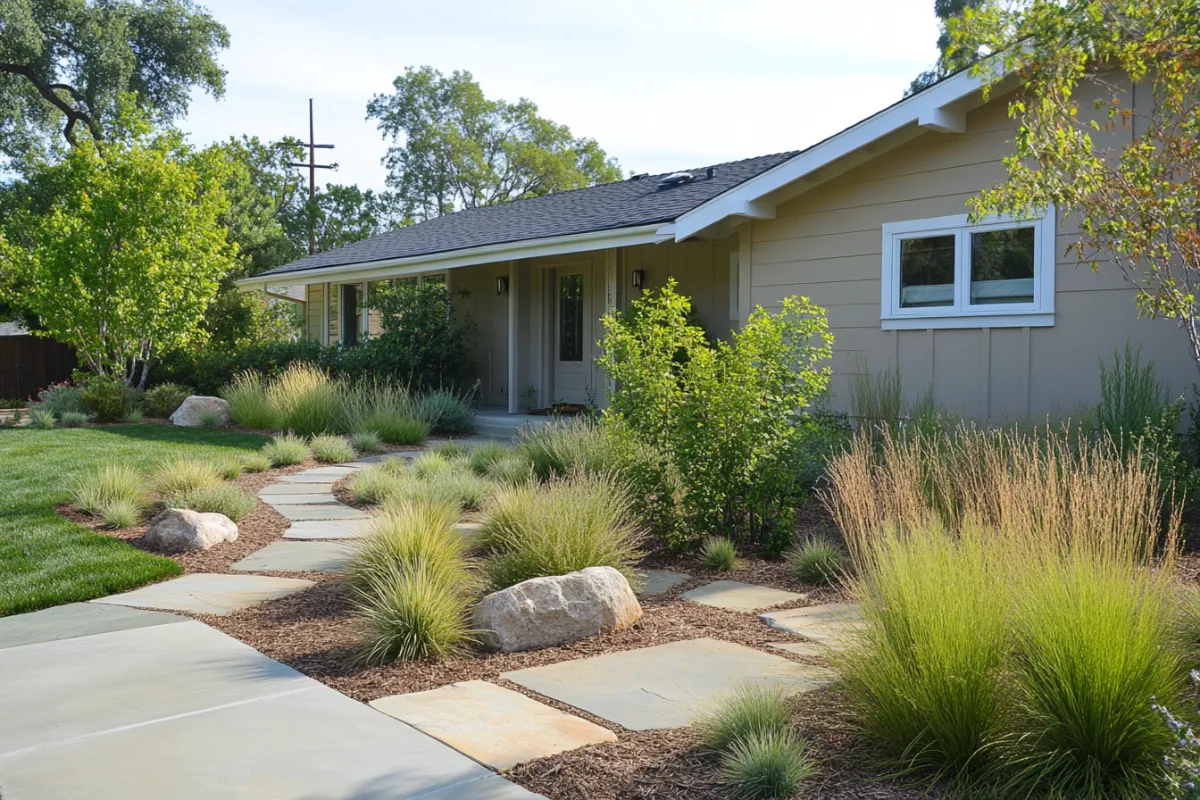
When a Full Installation Makes Sense
Some yards need a refresh. Others need to start over. A full install is the right call when you're facing bare dirt after new construction or a remodel, when the old layout is wrong enough that patching it would cost nearly as much as replacing it, when a thirsty lawn and overgrown shrubs need to give way to something easier, or when drainage, slope or soil problems have to be fixed at the root. It's also what you do once a landscape design is finished and you want the whole plan built at once. Doing it together costs less than the same work spread over years of small jobs, because the equipment comes once, the ground opens once, and each stage sets up the next. It's also the only time to fix the things you can't reach later, like drainage under a patio or irrigation sleeves under a path.
The Order a Landscape Gets Built
Sequence is everything. Demolition and clearing come first. Rough grading follows, shaping the ground so water heads away from the house on its own. Drainage lines and retaining walls go in next, while the soil is open. Then hardscape: patios, paths, steps and edging. Irrigation mains and drip tubing come after, so nothing heavy rolls over them. Soil gets amended, plants go in, then mulch or gravel. Lighting wire usually travels alongside the irrigation. Build out of order and you end up trenching through a new patio or running a compactor over new plants. Written down, it sounds obvious. On a real site, with deliveries landing on different days, holding that order is the discipline that separates a clean job from a messy one, and it's not something we trade away to finish a few days sooner.
Free estimate, no obligation.
Call [TRACKING NUMBER]How We Run an Installation
Before work starts, you have a written estimate and a schedule. We call 811 to mark buried utilities, protect what's staying, trees, fences, the house itself, and set a clean path for equipment. During the build, we work in the order above and let you know as each stage wraps. Driveways and walkways get cleaned at day's end, and equipment stays off the parts of the yard we're not working on. When we hit something unexpected, an old buried slab, a cracked drain line, we show you and agree on the fix before touching it. At the end, we go over the finished yard together, set the irrigation controller, and walk you through what the new plants need in their first summer.
Why Soil Prep Matters in Marin
Much of Marin sits on heavy clay. In winter it holds water like a sponge. In summer it dries to something close to brick. Plants dropped straight into it tend to struggle. On hillsides, the topsoil is thin and rock isn't far down. So soil prep is part of every install we do. We break up compacted ground, work compost into the planting beds, and match the plants to what the soil can actually support. In shady spots that stay wet, we also watch for ground that drains too slowly, because roots sitting in cold, soggy clay all winter rot before spring. Nobody sees any of this once the job is done. It's also the main reason one new yard is thriving in August while the one next door is half dead.
Once the plants are in, a well-tuned drip irrigation system is what gets them through their first dry summer.
Common Questions
Two to six weeks on site for most full yards in Marin. A small, flat backyard with simple planting sits at the short end. A sloped property with walls, drainage and a big patio sits at the long end. Winter rain can add a few days, since we don't dig or pour in a downpour. Your estimate includes a realistic schedule, and we tell you right away if weather or a surprise underground changes it.
Usually not. With gates unlocked and a spot to stage materials, we can work while you're out, and we check in as each stage begins and wraps up. It helps to be around on the first morning and for the final walkthrough, when we set the irrigation timer and go over plant care. If you have pets, tell us ahead of time so we can plan around open gates and trenches.
Yes. Plenty of Marin homeowners split a project across two seasons to spread the cost. The key is sequence: grading, drainage and the heavy pieces, walls and patios, go in the first phase, since they need equipment that would wreck finished planting. Irrigation sleeves can run under new hardscape ahead of time so later phases never cut into it. Planting and finishing touches can wait.